Our modern world is loud—so loud, in fact, that sometimes we take for granted just how loud the volume gets and the potential effects it can have on our hearing. There are some noises you may hear on a daily basis that are causing lasting damage to your hearing health, so let’s discuss them and ways to protect your hearing.
How Does Noise Cause Hearing Damage?
In your inner ear is an organ called the cochlea. The cochlea is shaped like a spiral, filled with fluid, and lined with thousands of tiny hair-like sensory cells. When sound waves enter the cochlea, the fluid ripples, causing the hair cells to jiggle and vibrate in the waves. These vibrations are turned into electrical signals that the brain uses to interpret sounds and pitch.
The louder the noise, the stronger and larger the sound wave. Large sound waves enter the cochlea with force, causing massive vibrations in the cochlear fluid that can bend or damage the hair cells. When they are damaged, they cease creating electrical signals for the brain, meaning that sound information will never reach the brain. Damaged cells do not regenerate.
What Volume Can Cause Hearing Damage?
Sound is measured in decibels (dBA). Louder noises are higher in decibels. 85 dBA is considered potentially dangerous for extended periods of time, and 120 dBA can cause immediate hearing damage. For reference, normal conversation levels are usually around 60–70 dBA.
Keep in mind: decibels increase exponentially, not linearly. This means that the difference in sound intensity between 60 dBA and 80 dBA is not the same as the difference between 80 dBA and 100 dBA. A difference of three decibels means the sound intensity has doubled. A difference of ten decibels means the sound intensity is ten times more powerful.
Everyday Sounds That Could Be Harming Your Hearing
Here are some items around your house and neighborhood that can reach 85+ dBA and cause hearing damage, perhaps even without your noticing.
- Vacuum cleaner (70–85 dBA)
- Washing machines and dryers (70–90 dBA)
- Garbage disposal (80–95 dBA)
- Hair dryer (80–95 dBA)
- Blender (85–90 dBA)
- Lawn mower (90 dBA)
- Slamming a door (100 dBA)
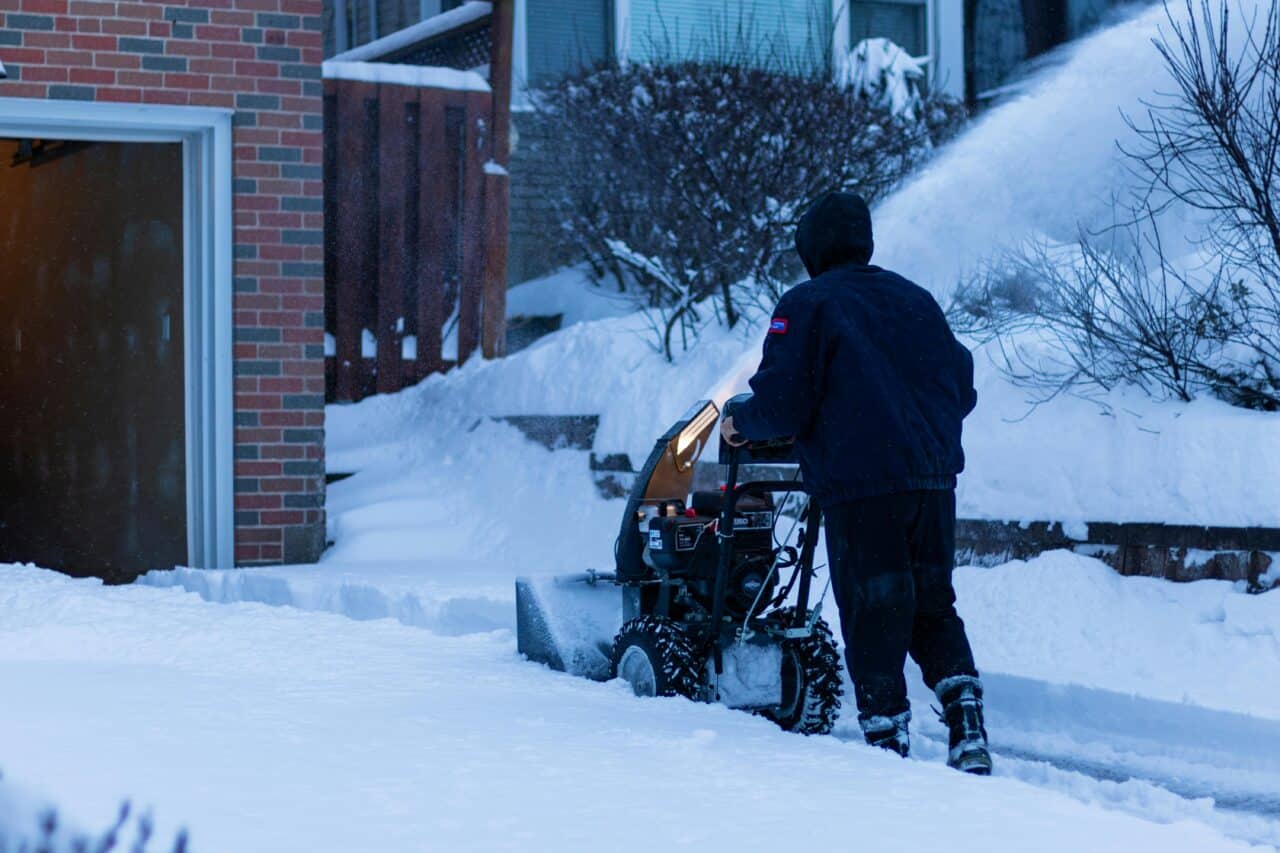
- Leaf blower or snow blower (100–110 dBA)
- Police, ambulance and fire truck sirens (120 dBA)
- Jackhammer (130 dBA)
How to Protect from Hearing Damage
The first way to protect yourself from hearing damage is to limit exposure. That doesn’t mean that you can never use your garbage disposal again; rather, there are some time limits to keep in mind.
For sounds of 85 dBA, your maximum exposure time before irreparable damage occurs is eight hours. Bearing in mind that for every three decibels, sound intensity doubles, that means that for every three decibels, maximum exposure time halves: four hours for 88 dBA, two hours for 91 dBA, one hour for 94 dBA, etc. Try not to exceed these limits, and using these household items should be safe.
However, you’re likely going to need your snow blower for longer than 15 minutes, which is the maximum exposure time for sounds of 100 dBA. In that case, use robust hearing protection, like earplugs or earmuffs. Some of the best hearing protection available can reduce noise by up to 30 dBA.
If you notice any change in your hearing, such as difficulty following conversations or muffled hearing, you should consult an audiologist. Noise-induced hearing loss is the second-most common type of hearing loss, but the good news is that it’s entirely preventable. Contact Premier Medical Group today to schedule a hearing test. We can determine the extent of the damage to your hearing, begin a treatment plan, and protect your residual hearing together.