
Studies Show Noise-Induced Hearing Loss Can Be Blocked With Drug Compound
Inner hair cells of the cochlea (green and blue) excite auditory nerve fibers (red) by releasing glutamate, a chemical signal that helps convert sound waves into electrical signals that travel to the brain. But too much glutamate can be harmful, leading to noise-induced hearing loss. Studying mice, researchers at Washington University School of Medicine in…
CRISPR Treatment Prevents Hearing Loss In Mice
A single treatment of a genome editing agent partially preserved hearing in mice with genetic deafness. The work could one day help scientists treat certain forms of genetic hearing loss in humans. Using molecular scissors wrapped in a greasy delivery package, researchers have disrupted a gene variant that leads to deafness in mice. A single…
What is Noise Induced Hearing Loss?
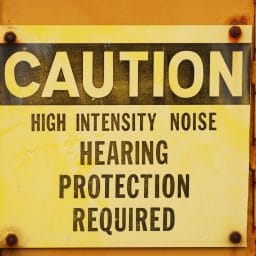
How Can Sounds Hurt Your Ears? Background sound is a constant in our busy lives. Normally, background noises are at safe levels that do not negatively impact our hearing. But repeated exposure to noise above 85 decibels (dB) can cause noise induced hearing loss. The louder the sound, the less amount of time it takes…
What is Sudden Hearing Loss?

For most people who experience hearing loss, the condition comes on gradually over a period of years. In rare cases, an abrupt loss of hearing occurs with little or no warning. This condition is known as sudden sensorineural hearing loss (SSHL). What is Sudden Deafness? Sudden deafness is an unexplained and rapid hearing loss that…
What is Unilateral Hearing Loss?

What is Single Sided Deafness? Sometimes referred to as unilateral hearing loss, single sided deafness is a condition in which an individual experiences hearing loss in only one ear but can hear normally out of the other ear. While most patients with a hearing impairment suffer from bilateral (two-sided) hearing loss, SSD affects approximately 60,000…